

The way people move and spend money is changing rapidly, and stablecoin payments are leading that transformation. Unlike traditional cryptocurrencies that experience significant price fluctuations, stablecoins are designed to maintain a stable value by being pegged to assets such as the US Dollar or Euro. This stability makes them practical for everyday transactions, international transfers, business payments, and digital commerce. As blockchain technology becomes more integrated into global finance, stablecoin payments are helping bridge the gap between traditional banking and decentralized finance (DeFi). Whether you’re an individual looking for faster payments or a business exploring new payment methods, understanding how stablecoin payments work is essential for navigating the future of digital finance.
What Are Stablecoin Payments?
Stablecoin payments are transactions made using cryptocurrencies whose value is tied to stable assets. Instead of worrying about the volatility commonly associated with cryptocurrencies like Bitcoin or Ethereum, users can send and receive digital assets with greater price predictability.
Popular stablecoins include USDC, USDT, EURC, and other asset-backed digital currencies that operate on blockchain networks.
Because they combine the speed of blockchain with price stability, stablecoin payments are becoming increasingly popular for both consumers and businesses.
Why Stablecoin Payments Are Growing in 2026
Several factors are driving the widespread adoption of stablecoins across the global economy.
Faster Transactions
Traditional international bank transfers often require several intermediaries and may take multiple business days to settle.
Stablecoin payments can often be completed within minutes, depending on the blockchain network being used.
Lower Transaction Costs
International wire transfers and payment processors frequently charge significant fees.
Using blockchain-based payment networks helps reduce costs by removing multiple intermediaries, making stablecoins attractive for both personal and commercial transactions.
Global Accessibility
Anyone with internet access and a compatible digital wallet can participate in stablecoin transactions without depending on traditional banking infrastructure.
This accessibility is expanding financial inclusion across emerging markets and underserved regions.
How Stablecoin Payments Work
The payment process is relatively straightforward.
A sender transfers stablecoins from their digital wallet to the recipient’s wallet address. The blockchain validates the transaction and records it on a distributed ledger.
Once confirmed, the recipient gains immediate access to the transferred funds.
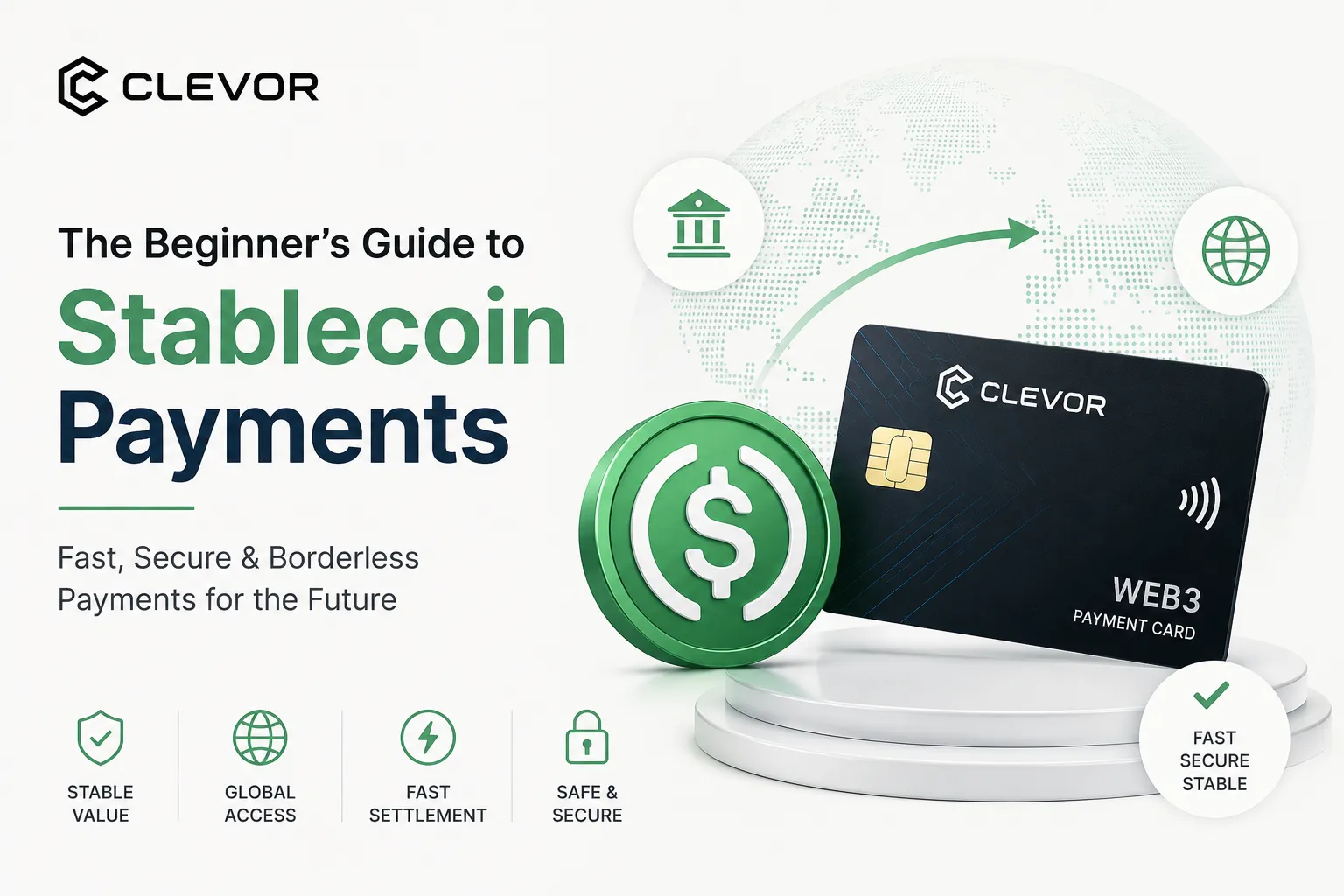
Modern solutions like a Web3 payment card allow users to bridge digital assets with everyday spending, making stablecoin payments even more practical for real-world purchases.
Benefits of Stablecoin Payments
Stablecoin payments provide advantages for individuals, businesses, and financial institutions.
Key benefits include:
-
Faster settlement times.
-
Reduced international payment costs.
-
Transparent blockchain records.
-
Lower reliance on traditional banking systems.
-
Increased accessibility for global users.
-
Better payment predictability due to stable asset backing.
-
Improved financial flexibility for digital businesses.
These benefits continue to drive adoption across industries including e-commerce, fintech, payroll, and international trade.
Stablecoin Cross-Border Payments
One of the strongest use cases for blockchain technology is stablecoin cross-border payments.
International money transfers have traditionally been slow, expensive, and dependent on multiple correspondent banks.
Using stablecoin cross-border payments enables businesses and individuals to send value across borders with fewer intermediaries, faster settlement, and greater transparency.
This approach is especially valuable for:
-
International freelancers.
-
Remote employees.
-
Global suppliers.
-
Cross-border e-commerce.
-
International payroll.
-
Family remittances.
As businesses continue expanding globally, stablecoin-based transfers offer a modern alternative to legacy payment systems.
Stablecoins and Everyday Crypto Payments
The growing acceptance of digital assets is making crypto payments more practical than ever before.
Consumers increasingly want to use cryptocurrency not only as an investment but also as a spending tool.
Stablecoins solve one of crypto’s biggest challenges—price volatility—making them suitable for everyday purchases such as:
-
Online shopping.
-
Subscription services.
-
Travel bookings.
-
Digital services.
-
Retail purchases.
-
Business invoices.
When paired with secure smart card technology, stablecoin payments become even more convenient for both online and in-person transactions.
Security Considerations
While stablecoins offer many advantages, users should still prioritize security.
Best practices include:
-
Store assets in a secure self-custodial wallet.
-
Protect private keys and recovery credentials.
-
Enable strong authentication.
-
Verify recipient addresses before sending payments.
-
Use trusted blockchain networks and payment platforms.
A secure crypto payments ecosystem depends not only on blockchain technology but also on responsible wallet management and strong authentication practices.
Stablecoins and the Future of Digital Finance
Stablecoins are becoming a key component of the evolving digital economy.
Governments, financial institutions, fintech companies, and payment providers are increasingly exploring blockchain-powered payment infrastructure that combines regulatory compliance, transparency, and efficiency.
As adoption grows, stablecoin payments are expected to play a central role in:
-
Cross-border commerce.
-
Decentralized finance (DeFi).
-
Merchant payments.
-
Enterprise treasury management.
-
Digital payroll.
-
Tokenized financial services.
Combined with secure hardware wallets, smart cards, and Web3 payment technologies, stablecoins are helping reshape how value moves across the global economy.
Conclusion
The future of digital payments is being shaped by faster, more accessible, and more efficient financial technologies, and stablecoin payments are at the center of this transformation. By combining blockchain speed with price stability, stablecoins provide a practical solution for individuals, businesses, and global organizations seeking secure and cost-effective transactions. From international transfers and business payments to everyday purchases, stablecoin payments are making digital assets more useful in real-world scenarios. As Web3 adoption accelerates and payment technologies continue to evolve, understanding stablecoin payments will become increasingly important for anyone looking to participate in the next generation of global finance.