

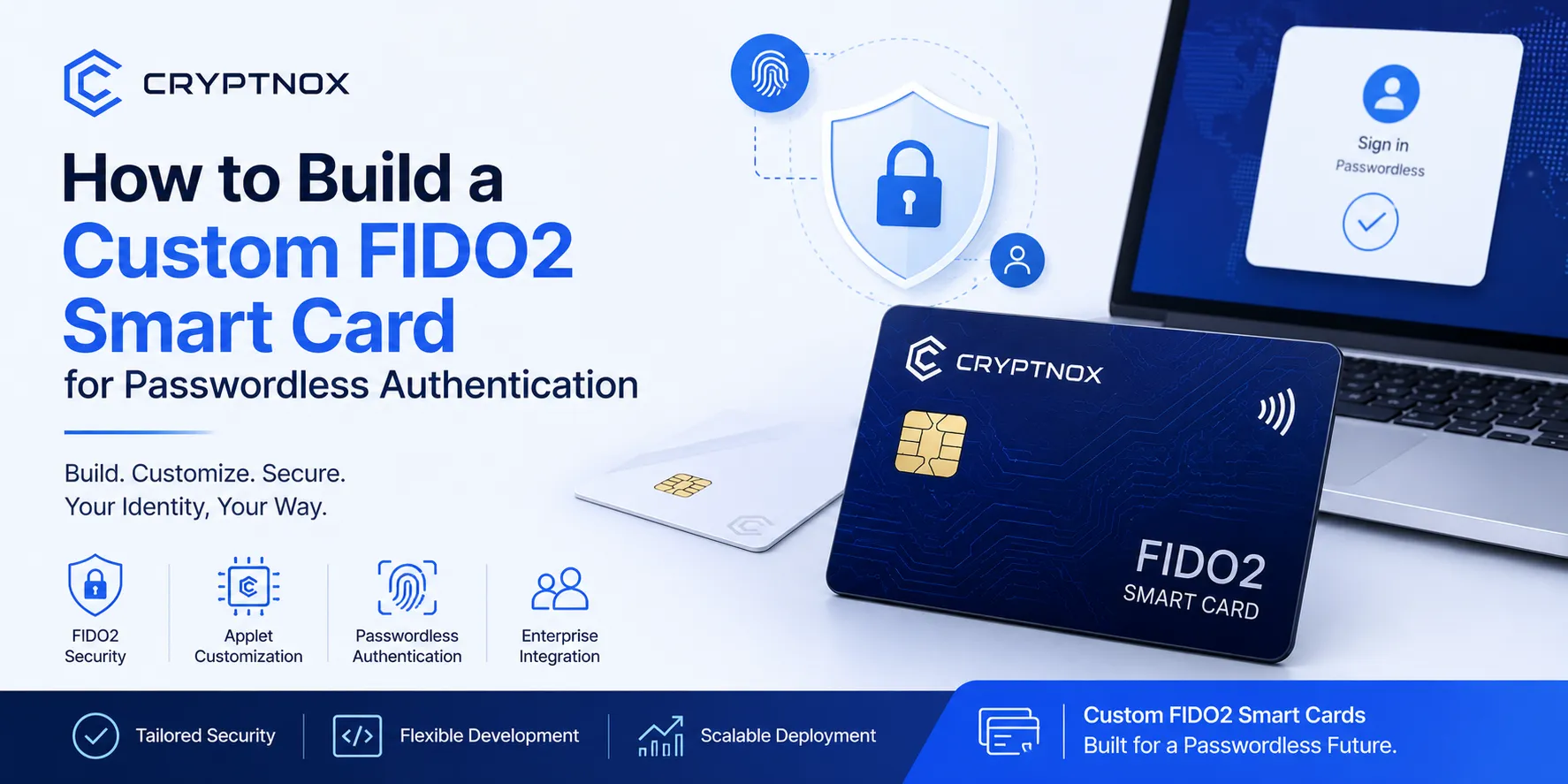
As organizations accelerate their transition to passwordless authentication, the demand for customizable FIDO2 solutions continues to grow. Enterprises, financial institutions, government agencies, and technology providers increasingly require authentication solutions tailored to their own security policies, branding, and deployment requirements. This is where Custom FIDO2 smart card development becomes invaluable. Rather than relying on off-the-shelf authentication devices, organizations can develop secure smart cards that integrate seamlessly with their identity infrastructure while delivering phishing-resistant authentication based on FIDO2 and WebAuthn standards. Understanding the development process helps enterprises build scalable, future-ready authentication systems that improve both security and user experience.
What Is Custom FIDO2 Smart Card Development?
Custom FIDO2 smart card development is the process of designing and building a smart card that supports passwordless authentication using the FIDO2 standard while meeting an organization’s unique operational and security requirements.
Unlike generic authentication devices, custom smart cards can be tailored for:
-
Enterprise branding.
-
Identity management integration.
-
Employee access control.
-
Multi-application functionality.
-
Secure authentication workflows.
-
Large-scale enterprise deployments.
This flexibility allows organizations to align authentication technology with existing business processes without compromising security.
Why Organizations Choose Custom FIDO2 Solutions
Every enterprise has unique authentication requirements.
Some organizations need secure employee login cards, while others require authentication devices that integrate with physical access systems, PKI certificates, or enterprise identity platforms.
A custom development approach provides greater flexibility by enabling organizations to:
-
Deploy organization-specific authentication policies.
-
Simplify employee onboarding.
-
Improve identity management.
-
Support passwordless authentication initiatives.
-
Enhance long-term scalability.
This level of customization is particularly valuable for regulated industries that require strict identity controls.
Core Components of a Custom FIDO2 Smart Card
Building a secure authentication solution involves several essential components working together.
Secure Smart Card Hardware
The smart card contains a tamper-resistant secure element responsible for safely storing cryptographic credentials and performing authentication operations.
Because private keys never leave the secure hardware, organizations gain significantly stronger protection against credential theft.
FIDO2 Applet
The authentication logic resides within the FIDO2 applet.
Proper FIDO2 applet customization allows organizations to optimize authentication workflows while maintaining compatibility with FIDO2 and WebAuthn standards.
Enterprise Identity Integration
Custom cards should integrate smoothly with identity providers, enterprise authentication platforms, and passwordless login systems.
This enables users to authenticate securely across cloud services, enterprise applications, and corporate networks.
The Development Process
Successful Custom FIDO2 smart card development typically follows several structured phases.
Requirements Analysis
Organizations first define their authentication goals, deployment scale, compliance requirements, and integration needs.
Questions commonly addressed include:
-
Who will use the cards?
-
Which authentication systems must be supported?
-
Will physical access be integrated?
-
What level of lifecycle management is required?
Card Design
During this stage, developers determine:
-
Card hardware configuration.
-
Secure element selection.
-
Authentication features.
-
Branding and personalization.
-
Security architecture.
Software Development
The FIDO2 application is configured and optimized to support secure authentication while remaining compatible with enterprise identity systems.
Testing and Validation
Before deployment, the solution undergoes comprehensive testing to verify authentication reliability, interoperability, and security performance.
Benefits of Passwordless Authentication
Passwordless authentication offers significant advantages over traditional password-based security.
Organizations implementing modern authentication solutions benefit from:
-
Strong phishing resistance.
-
Elimination of password reuse.
-
Faster employee login.
-
Reduced password reset costs.
-
Improved user experience.
-
Better compliance with cybersecurity frameworks.
-
Stronger Zero Trust security.
As cyber threats continue evolving, passwordless authentication provides one of the most effective methods for protecting enterprise identities.
Enterprise Use Cases
Custom FIDO2 smart cards support a wide variety of enterprise environments.
Common deployments include:
-
Corporate employee authentication.
-
Government identity programs.
-
Financial institutions.
-
Healthcare organizations.
-
Educational institutions.
-
Technology companies.
-
Managed service providers.
These deployments often integrate with Microsoft Entra, Google Workspace, enterprise VPNs, cloud applications, privileged administrator accounts, and secure workstation authentication.
Why Cryptnox Development Services Matter
Developing enterprise-grade authentication solutions requires expertise in secure hardware, smart card technology, cryptographic applications, and identity management.
Cryptnox FIDO2 development focuses on helping organizations build secure smart card solutions that combine hardware-backed security with scalable enterprise deployment capabilities.
By leveraging specialized development services, organizations can accelerate implementation while maintaining high security standards throughout the design, testing, and deployment lifecycle.
Best Practices for Building a Custom FIDO2 Smart Card
To maximize security and long-term reliability, organizations should follow several best practices:
-
Use tamper-resistant secure elements.
-
Design for passwordless authentication from the beginning.
-
Support enterprise identity platforms.
-
Follow FIDO2 and WebAuthn standards.
-
Plan secure lifecycle management.
-
Perform extensive security testing.
-
Train administrators on deployment procedures.
Careful planning during development significantly reduces future operational challenges while improving user adoption.
The Future of Enterprise Authentication
Passwordless authentication is quickly becoming the preferred approach for securing enterprise identities. Organizations are moving beyond passwords toward hardware-backed authentication methods that reduce phishing risks and improve user productivity.
Custom FIDO2 smart cards represent a flexible and scalable solution that combines cryptographic security, enterprise integration, and modern identity management into a single authentication platform. As Zero Trust architectures continue to mature, organizations investing in custom authentication solutions will be better positioned to protect users, applications, and digital assets.
Conclusion
Building a passwordless authentication solution begins with secure hardware, robust cryptography, and thoughtful customization. Custom FIDO2 smart card development enables organizations to create authentication systems tailored to their unique security requirements while supporting scalable enterprise deployments. From FIDO2 applet customization and secure hardware design to seamless identity integration, a custom smart card provides a future-ready foundation for enterprise authentication. As businesses continue replacing passwords with phishing-resistant technologies, investing in custom FIDO2 smart card development will play an essential role in strengthening cybersecurity and improving digital identity management.