

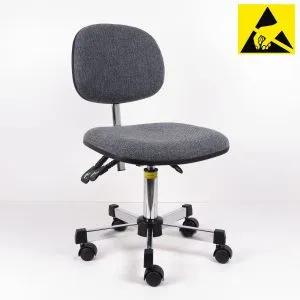
Technicians sit for hours, and a poor seat quickly turns into sore backs, mistakes and rushed work. Less obvious is the static risk: foam, fabric and plastic generate charge every time someone shifts position. Selecting proper ESD chairs solves comfort and control together, which is rare enough in workplace design to deserve attention. Here is how to think it through.
The Moving Source Nobody Counts
Picture a technician leaning back, crossing legs and swivelling to reach a shelf. Each movement rubs clothing against upholstery and builds charge. That voltage then travels with the person to the very next board they pick up. The chair is a charge generator sitting right at the heart of the workstation. Ordinary office chairs make it worse.
Casters add another wrinkle. Standard plastic casters sit on insulating wheels, isolating the chair from the floor. A person on such a chair is effectively floating, unable to discharge. Even a grounded wrist strap becomes less effective when the cord keeps getting dragged and tangled. Small details decide outcomes.
What Makes a Seat Safe for Sensitive Work
Look for conductive or dissipative upholstery, such as specially treated vinyl or fabric, paired with conductive casters or a drag chain. These elements let charge move from the person through the seat towards a grounded floor. Together they replace a random path with a reliable one. Ask for the specification, not just a label. Marketing words are cheap.
Remember that the chair needs somewhere to send the charge. It works best on a grounded floor or beside a bench fitted with an anti static mat, so the whole workstation forms one coherent system. A chair alone cannot do everything, and pairing the parts avoids gaps. Think of it as a team effort. Missing links are where failures start.
Ergonomics Is Not a Luxury
Tired people make errors. A seat with adjustable height, lumbar support and a sensible seat depth keeps the body steady through long soldering or inspection sessions. Comfort reduces fidgeting, and less fidgeting means less friction and fewer unexpected charge events. Good posture is productivity in disguise. The benefits compound across a shift.
Measure the people, not just the room. A tall operator needs a different seat height from a short one, and a shared station needs quick adjustment. Test a sample chair for a week before ordering many, and collect honest feedback from the people who will actually use it. Opinions matter more than brochures. Ask about warranty too.
Care, Cleaning and Replacement
Upholstery wears, and with it the electrical properties can change. Cracks, peeling and heavy staining may block the conductive path. Wipe surfaces with suitable cleaners, avoid silicone polishes and inspect seat and casters regularly for damage, grit or hair wrapped around the wheels. Ten minutes a month is enough. Schedule it like any maintenance.
Test chairs alongside other equipment. A simple resistance check from seat to floor reveals whether a chair still does its job. Keep a log, tag any failures and retire worn seats promptly. A chair that quietly stopped working is worse than no chair, because it creates false confidence. Replacement budgets should be planned, not improvised.
Fitting Chairs Into a Wider Plan
Chairs are one piece of a bigger puzzle. Flooring, bench surfaces, wrist straps, clothing and storage all need to agree with one another. Draw a simple map of each workstation and tick off every contact point. Gaps usually appear at the edges, not the centre. That is where audits tend to look first. Fix those first.
Involve the team early. People accept new equipment more readily when they help choose it. Explain the purpose, show the benefits and invite suggestions. A workforce that understands why the seat matters will look after it, and will happily remind colleagues who forget. Ownership beats enforcement every time. Culture is a quiet safeguard.
Conclusion
A good work chair does two jobs: it looks after the person, and it protects the product. Treat it as part of the electrical path, choose it for fit and keep it in working order. Small details at seat level prevent surprisingly large losses. Comfort and caution belong together.
Browse seating options and complementary equipment at elcomltd.com, and take the first step towards a workspace that is comfortable, tidy and properly protected. Your technicians will notice the difference quickly.